"Cassava yam" is a misnomer for cassava, a starchy, tuberous root vegetable native to the tropics and subtropics, also known as yuca or manioc. It is a staple crop and a vital source of carbohydrates for hundreds of millions of people worldwide. Cassava is a hardy, drought-resistant plant but must be thoroughly cooked before eating to eliminate dangerous levels of cyanide. It has a rough, bark-like skin, can be prepared in many ways (like boiling, baking, or frying), and is used to make flour, tapioca, and various dishes such as fufu.
Cassava is primarily a source of carbohydrates and calories, containing some fiber, potassium, magnesium, and Vitamin C, but very low amounts of protein and fat. A 3.5-ounce (100-gram) serving of cooked cassava root provides about 191 calories, with the vast majority of its energy coming from carbs. It's considered a staple food in many regions due to its energy content and digestive benefits, but it should be supplemented with protein sources to prevent malnutrition.

.png "Cassava Yam - 10kg")
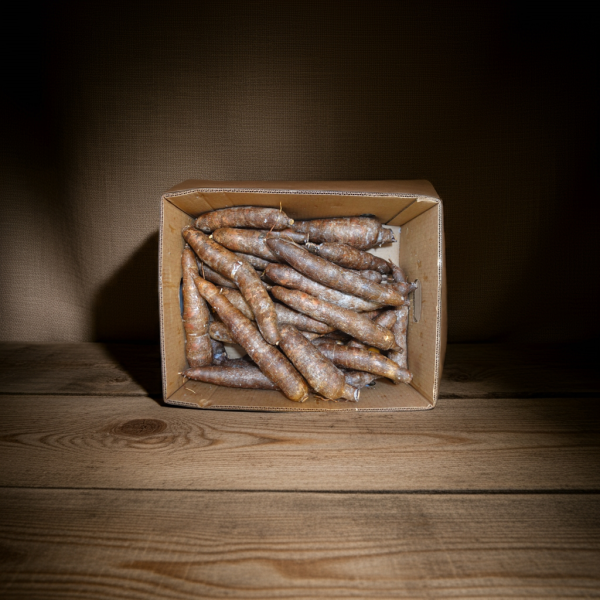
.png "Preview: Cassava Yam - 10kg")
